
The Banker Who Knew Your Story
In 1965, getting a mortgage meant sitting across from someone who probably went to high school with your older brother. The bank president knew your family, your work history, and whether you showed up to church on Sundays. Your creditworthiness wasn't a three-digit number—it was your reputation walking through the door.
Jim Patterson remembers applying for his first home loan in 1968 in Columbus, Ohio. "I walked into First National, asked for Mr. Henderson, and he knew exactly who I was," Patterson recalls. "He'd seen me working at the hardware store for three years. He knew my dad from the Rotary Club. The whole conversation took maybe twenty minutes."
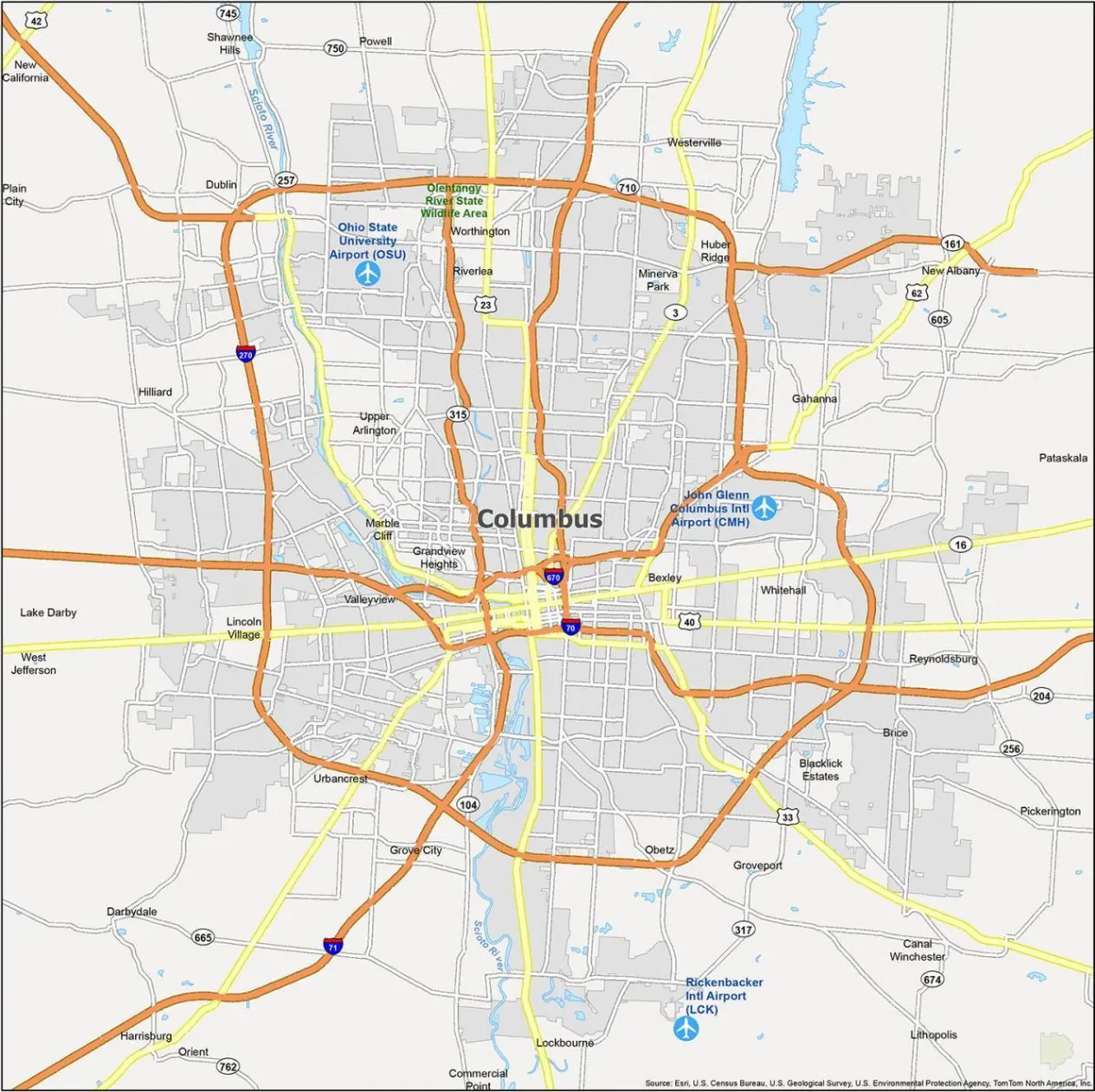 Photo: Columbus, Ohio, via gisgeography.com
That twenty-minute conversation secured Patterson a 30-year mortgage with a handshake. No credit report. No debt-to-income calculations. No algorithmic risk assessment. Just one human being vouching for another based on years of observation and community knowledge.
The World Before Credit Scores
Before 1989, when the FICO score became the industry standard, lending decisions happened through what bankers called "character assessment." Loan officers evaluated what they termed the "Five Cs": Character, Capacity, Capital, Collateral, and Conditions. But character came first, and it meant something entirely different than it does today.
Character wasn't about payment history—it was about who you were as a person. Did you keep your word? Were you known in the community? Did local business owners vouch for you? The bank might call your employer, but they were just as likely to ask the grocer down the street about your family's reputation.
This system worked because communities were smaller and more interconnected. The banker making your loan decision probably lived three blocks away. He might see you at the same diner every Tuesday, know your kids from Little League, or worship at the same church. Your financial life was inseparable from your social life.
When Everything Changed
The shift began in the 1970s as banks grew larger and lending became more standardized. By the 1980s, credit reporting agencies had compiled enough data to create numerical scoring systems that promised to predict loan defaults more accurately than human judgment.
The Fair Isaac Corporation's credit score, introduced in 1989, revolutionized lending by reducing every borrower to a number between 300 and 850. Suddenly, your ability to buy a home depended not on your reputation in the community, but on a mathematical formula weighing your payment history, credit utilization, and account age.
 Photo: Fair Isaac Corporation, via c8.alamy.com
Banks embraced the change enthusiastically. Credit scores eliminated the time-consuming process of relationship building and community research. They also provided legal protection against discrimination claims—after all, the algorithm treated everyone the same way.
What We Lost in Translation
The old system wasn't perfect. Relationship-based lending often excluded newcomers, minorities, and anyone who didn't fit the local social fabric. If the banker didn't know your family or you belonged to the "wrong" church, your character assessment might suffer regardless of your actual creditworthiness.
But something profound was lost in the transition to algorithmic lending. The credit score system assumes that past payment behavior predicts future performance, but it can't account for context, circumstances, or personal growth. A medical bankruptcy from five years ago carries the same weight as chronic financial irresponsibility.
Moreover, credit scores create a feedback loop that can trap people in financial purgatory. Miss a few payments during a rough patch, and your score drops, making credit more expensive, which makes financial recovery harder, which keeps your score low. The old banker might have worked with you through tough times, knowing your character and potential. The algorithm just sees data points.
The New Math of Homeownership
Today's mortgage process involves credit reports, automated underwriting systems, and risk-based pricing models that would be completely foreign to that 1960s banker. A typical mortgage application generates hundreds of data points that feed into computer models designed to predict default probability within fractions of a percentage point.
The irony is that while lending has become more "objective," homeownership has become less accessible. In 1970, when character mattered more than credit scores, about 62% of American families owned their homes. Today, despite all our sophisticated risk assessment tools, that number has barely budged.
Part of the problem is that credit scores measure financial behavior, but they don't measure financial capacity the way a local banker could. The algorithm doesn't know that you've been saving money for three years by walking to work instead of buying a car, or that you're about to finish a degree that will double your income.
Full Circle, Different Place
Interestingly, some lenders are now trying to recreate elements of relationship-based lending through technology. Alternative credit scoring models consider rent payments, utility bills, and even social media activity to build a more complete picture of creditworthiness.
But these new approaches still miss what made the old system work: genuine human relationships and community knowledge. The modern banker processing your loan application might be sitting in a call center three states away, armed with data but lacking the context that comes from living in the same place and sharing the same community concerns.
The shift from handshake lending to algorithmic approval represents more than just technological progress—it reflects America's transformation from a collection of small communities to a mass society where most of our important relationships happen between strangers. We gained efficiency and consistency, but we lost something harder to quantify: the economic value of being known.
In a world where your mortgage depends on a credit score rather than your character, we've made lending fairer in some ways and more impersonal in others. Whether that trade-off was worth it depends on whether you think a computer algorithm can truly capture what it means to be a good neighbor—and a good bet.