The 9-to-5 Used to Unite America — Now We're All Living on Different Clocks
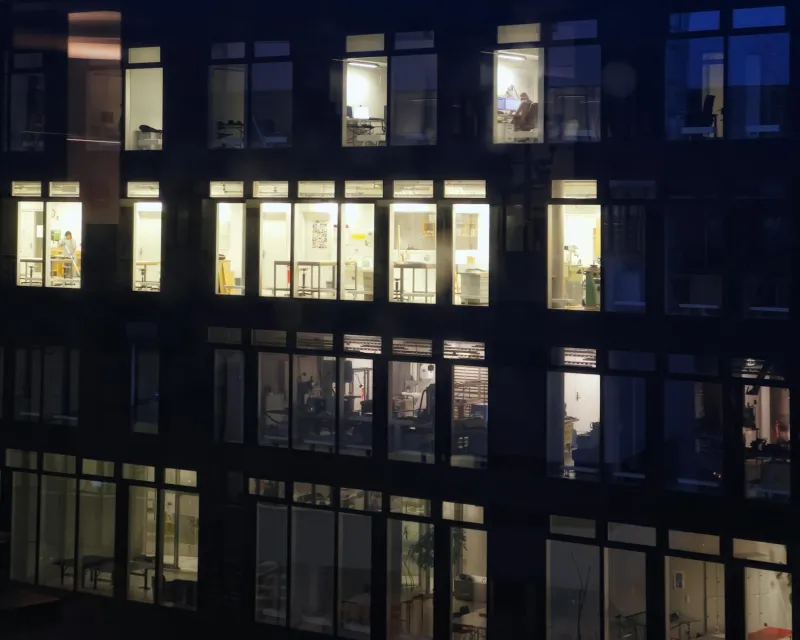
When America Moved as One
At exactly 5:00 PM on any weekday in 1965, something remarkable happened across America. Office lights flickered off from coast to coast. Cars flooded highways in predictable waves. Families gathered for dinner at roughly the same time in millions of homes. America operated on a shared clock, and that synchronization shaped everything from television programming to social life.
The standard 40-hour work week wasn't just about labor — it was about creating a common rhythm for an entire society. Monday through Friday, 9 AM to 5 PM, with an hour for lunch. Weekends were sacred. Evenings belonged to family. This wasn't just a work schedule; it was a social contract that organized American life.
The Architecture of Shared Time
That predictable schedule built the infrastructure of American community. Restaurants knew when to expect the lunch rush. Television networks programmed around prime time because they knew when families would be home together. Little League games happened after work because coaches and parents operated on the same schedule.
 Photo: Little League, via thumbs.dreamstime.com
Neighborhoods had rhythms too. Morning coffee with neighbors before heading to work. Kids walking to school while parents commuted. The evening return when suburban streets came alive with lawn mowers, barbecue grills, and children playing until dark. Weekends meant synchronized suburban activities: church, shopping, family outings.
Even dating followed the workweek rhythm. Friday night dates, Saturday night parties, Sunday family dinners. Young couples could plan their social lives because everyone's schedule was predictable. "Let's meet after work" meant something specific — around 5:30 PM when everyone was free.
The Crack in the Clock
The first major disruption came in the 1970s when more women entered the workforce, creating the need for extended daycare hours and shifting family dinner times. But the real fracture began in the 1990s as service industries expanded and technology made 24/7 operations possible.
Today, that shared schedule has completely shattered. According to the Bureau of Labor Statistics, only 42% of American workers follow a traditional Monday-Friday, 9-to-5 schedule. The rest work evenings, weekends, rotating shifts, or flexible arrangements that change weekly.
 Photo: Bureau of Labor Statistics, via costar.brightspotcdn.com
Consider the modern American family: Mom works Tuesday through Saturday at a retail job with varying hours. Dad works from home but takes calls with overseas clients at 6 AM. Their teenager has a part-time job with shifts that change weekly. Nobody eats dinner together regularly because nobody's home at the same time.
The Gig Economy's Time Chaos
The rise of gig work has accelerated this fragmentation. Uber drivers work whenever they want. Freelance designers juggle multiple projects with different deadlines. Remote workers spread across time zones attend video calls at all hours. The flexibility is liberating for individuals but devastating for community cohesion.
Restaurants now serve breakfast all day because there's no shared mealtime. Gyms stay open 24 hours because people exercise whenever their schedules allow. Banks operate online because branch hours no longer align with when people are free. We've gained individual flexibility but lost collective predictability.
What We Lost When Everyone Got Their Own Schedule
The psychological impact is profound. Humans are social creatures who thrive on shared rhythms. When everyone operates on different schedules, spontaneous social connections become nearly impossible. "Want to grab coffee?" now requires complex coordination instead of simple availability.
Children especially suffer from schedule chaos. In the 9-to-5 era, kids could count on parents being home for dinner and bedtime routines. Today's children often navigate multiple caregivers with varying schedules, making consistency and security harder to achieve.
Community organizations struggle too. Volunteer fire departments can't find members because people work unpredictable hours. Parent-teacher organizations schedule meetings that conflict with someone's work shift. Religious congregations compete with weekend work requirements.
The Social Cost of Flexibility
Modern scheduling offers undeniable benefits. Parents can attend school events during traditional work hours. Night owls can work when they're most productive. People can avoid rush hour traffic and crowded stores. But these individual gains come at a collective cost.
We've lost what sociologists call "temporal commons" — shared time that belongs to everyone. Prime time television died because families don't watch together anymore. Main Street businesses struggle because there's no predictable foot traffic. Dating apps exist partly because meeting people naturally became nearly impossible when everyone operates on different schedules.
 Photo: Main Street, via wallpaperaccess.com
The Search for New Rhythms
Some companies are trying to recreate shared time artificially. Tech firms mandate "core hours" when everyone must be available. Some families institute "device-free dinner time" regardless of work schedules. Communities organize events at multiple times to accommodate different shifts.
But these efforts feel forced compared to the natural rhythm that once unified American life. The 9-to-5 workday wasn't perfect — it excluded many people and could be rigid. But it provided something we're still trying to replace: a common heartbeat that synchronized an entire society.
Today's America operates more like a city that never sleeps, with all the energy and exhaustion that implies. We've gained individual freedom to work when we want, but we've lost the collective experience of moving through life together. In our rush toward flexibility, we may have scheduled ourselves out of community itself.