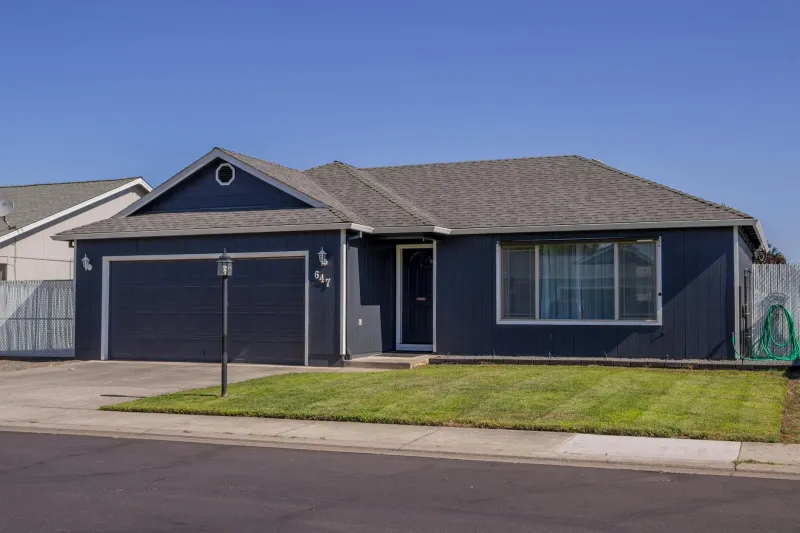
Picture this: It's 1975, and you're 25 years old with a high school diploma and a job at the local factory. After saving for eight months, you walk into the bank on a Saturday morning, shake hands with a loan officer who knows your father, and walk out with the keys to a three-bedroom house. Total time invested: about four hours. Total down payment: $2,000.
This wasn't fantasy. This was America.
When Houses Cost What Cars Do Today
In 1970, the median home price in America was $17,000. The median household income? About $8,700. Do the math, and you'll find that the average home cost roughly twice what a family earned in a year. A couple could realistically save for a down payment in less than a year and pay off their mortgage in a decade if they wanted to.
Today, that same ratio tells a very different story. With median home prices hovering around $400,000 and median household income at $70,000, we're looking at a house that costs nearly six times what a family earns annually. What used to require two years of income now demands six.
The shift becomes even more stark when you consider that in 1970, a single income could often handle the entire mortgage payment. Dad worked, mom stayed home with the kids, and the house payment represented about 15-20% of household income. Today's families need two incomes just to qualify for most mortgages, and they're typically committing 30-40% of their combined earnings to housing costs.
The Handshake Mortgage Era
The actual process of buying a home was refreshingly straightforward. You found a house you liked, agreed on a price with the seller, and headed to the bank. The loan officer—who likely lived in your neighborhood and knew your work history—would review your employment, check your savings account, and make a decision. The entire mortgage application was often a single page.
Down payments typically ranged from 10-20%, and many first-time buyers could get away with even less. Veterans could buy homes with zero down through the GI Bill, and FHA loans made homeownership accessible to working-class families who might not qualify for conventional mortgages.
Contrast that with today's mortgage maze. The average home buyer now navigates a 30-50 page mortgage application, provides months of bank statements, tax returns, employment verification letters, and detailed explanations for every deposit over $500. The process takes 30-45 days on average, assuming nothing goes wrong.
When Competition Meant Comparing Paint Colors
In most markets during the 1960s and 70s, buying a house meant choosing between available options, not fighting other buyers for the privilege of overpaying. Multiple offer situations existed but were rare. Bidding wars were virtually unheard of outside of a few hot markets like California.
A typical buyer could take their time, negotiate on price, ask for repairs, and even request that appliances be included in the sale. The idea of waiving inspections or offering $50,000 over asking price would have seemed absurd.
Today's buyers face a completely different reality. In many markets, successful offers require waiving inspections, paying cash, or bidding 20-30% above asking price. First-time buyers often find themselves competing against investors and cash buyers who can close in days rather than weeks.
The Vanishing Middle-Class Neighborhood
Perhaps most importantly, homeownership in the mid-20th century created genuine middle-class neighborhoods. Teachers, mechanics, factory workers, and small business owners all lived on the same streets because housing costs allowed for economic diversity within communities.
These weren't McMansions or luxury developments. They were modest homes—1,200 square feet was considered adequate for a family of four. But they were real homes with yards, in neighborhoods with good schools and walkable amenities.
Today's housing market has largely eliminated this middle ground. You can find affordable housing, but it's often in areas with limited job opportunities, poor schools, or long commutes. Alternatively, you can find great neighborhoods with excellent schools and amenities, but the housing costs price out most middle-class families.
What We Lost Along the Way
The transformation of American homeownership represents more than just changing economics—it reflects a fundamental shift in how we think about housing. What was once considered a basic component of middle-class life has become a luxury item that requires extensive financial planning and often family assistance to achieve.
The ripple effects extend far beyond individual families. When homeownership becomes unattainable for teachers, firefighters, and other essential workers, communities lose the economic diversity that once defined American neighborhoods. Young adults delay marriage, postpone having children, and often move away from their hometowns in search of affordable housing.
The Saturday morning home purchase—casual, straightforward, and accessible to working families—has become as obsolete as the corner drugstore or the family doctor who made house calls. In its place, we have a complex system that serves those with significant resources while leaving many others permanently locked out of what previous generations simply called the American Dream.
The numbers don't lie: what once took months to save for now takes years, and what once required a handshake now demands a small army of professionals. The dream hasn't died, but it's been priced out of reach for millions of Americans who would have been homeowners without question just fifty years ago.