Picture this: It's 1975, and at exactly 12:00 PM, offices across America empty out like someone pulled a fire alarm. Workers stream onto sidewalks, head to nearby diners, and spend the next hour doing something that seems almost quaint today—they eat lunch without checking email, taking calls, or staring at a computer screen.
The lunch hour wasn't just a break back then. It was a cultural institution as respected as Sunday church or the evening news. Workers didn't just grab a protein bar and keep typing. They left their desks, sat down at actual tables, and treated the midday meal as a legitimate pause in their day.
The Golden Age of Getting Away
In the 1950s through 1980s, the lunch break operated on a simple principle: work stopped. Period. Businesses built their schedules around this universal pause. Restaurants near office buildings knew exactly when the rush would hit. Phone calls went unanswered from noon to 1 PM because everyone understood—people were at lunch.
The typical American worker would walk to a nearby coffee shop, sit at a counter or booth, order a hot meal, and spend 45 minutes to an hour eating and maybe chatting with colleagues or reading a newspaper. Some even went home for lunch if they lived close enough. The idea of eating a sad desk salad while responding to emails would have seemed bizarre, even dystopian.
Restaurants designed their entire business models around the lunch crowd. "Blue plate specials" and "businessman's lunches" were standard offerings—quick but substantial meals served to workers who had a finite amount of time but expected to be treated like actual customers, not speed-eating machines.
When Everything Changed
The erosion didn't happen overnight. It started in the 1990s as corporate culture began shifting toward "efficiency" and "productivity optimization." The rise of personal computers meant work could theoretically happen anywhere, anytime. Email arrived and suddenly, stepping away for an hour felt like falling behind.
The dot-com boom accelerated this trend. Tech companies began promoting the idea that dedicated workers ate at their desks, that taking a full lunch hour was somehow less committed than grabbing a sandwich and powering through. The "working lunch" became a badge of honor rather than a compromise.
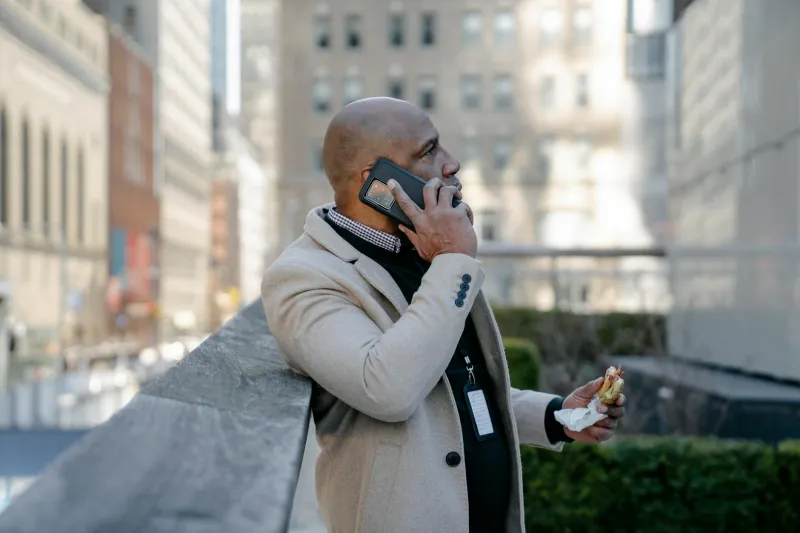
By the 2000s, the transformation was complete. Studies began showing that most American workers took less than 30 minutes for lunch, with many taking no official break at all. The rise of delivery apps and desk-friendly foods made it even easier to avoid leaving the office entirely.
The Numbers Tell the Story
The statistics are stark. In 1985, the average American worker took a 52-minute lunch break. By 2019, that number had dropped to just 30 minutes. But even those numbers don't tell the full story—because "lunch break" today often means eating while working, not actually stopping work.
A 2022 survey found that 62% of American workers regularly eat lunch at their desks while continuing to work. Another 23% skip lunch entirely on busy days. Only 15% of workers consistently take a full, work-free lunch break—the kind that was standard practice for their grandparents.
The restaurant industry adapted accordingly. Fast-casual chains exploded in popularity, designed specifically for workers who needed food quickly. The leisurely lunch counter disappeared from most business districts, replaced by grab-and-go concepts and delivery services.
What We Lost in Translation
The death of the lunch hour represents more than just changing eating habits. It reflects a fundamental shift in how Americans view work-life balance. The idea that work should pause for personal needs—even something as basic as eating—has been largely abandoned.
Previous generations understood something we've forgotten: that stepping away from work actually made people more productive, not less. The lunch break provided mental reset time, social interaction with colleagues, and a chance to return to afternoon tasks with fresh energy.
Today's always-on work culture treats the lunch break as inefficiency rather than necessity. We've gained the ability to respond to emails instantly but lost the rhythm of a workday that included built-in restoration time.
The Ripple Effects
The disappearance of the lunch break has reshaped American cities. Business districts that once buzzed with lunch crowds now feature fewer restaurants and more coffee shops designed for quick transactions. The social fabric of workplace relationships has changed too—fewer impromptu conversations happen when everyone eats alone at their desks.
Health experts point to concerning trends that coincide with the death of the lunch break: increased stress, poor digestion from rushed eating, and reduced workplace satisfaction. The simple act of leaving your workspace for a meal provided psychological benefits we're only now beginning to understand.
A Different Way of Working
Looking back, the lunch hour of 1975 seems almost luxurious. Workers who expected—and received—a full hour to eat, think, and recharge. Employers who understood that productivity came in cycles, not constant output. A business culture that respected the basic human need to pause.
Today's desk-lunch culture would have seemed dystopian to previous generations. The idea that checking email while eating a sandwich constitutes a "lunch break" would have been incomprehensible to workers who viewed the midday meal as sacred time.
The lunch hour's disappearance tells a bigger story about how work has consumed American life. What once was a clear boundary—work stops, life continues—has blurred into a continuous stream of productivity. We gained efficiency but lost something essentially human: the simple pleasure of stopping work to eat lunch.