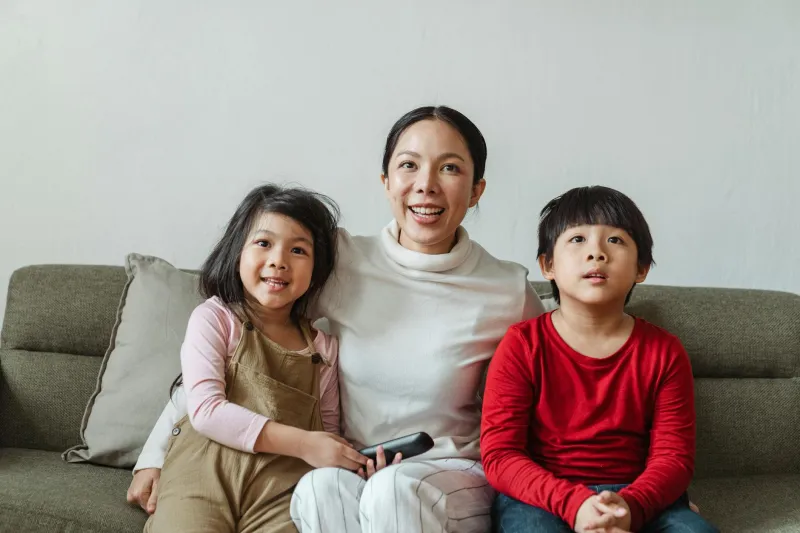
Every Friday night, the anticipation was almost unbearable. Tomorrow was Saturday, which meant one thing: cartoons. Not just any cartoons, but the cartoons—the ones that started at 8 AM sharp and ran until noon, the ones that every kid in your school would be watching at exactly the same time you were.
By Sunday night, you'd better have watched them all, because Monday morning playground conversations would revolve around what happened to the Smurfs, whether the Super Friends saved the day, or which new toy commercial disguised as a cartoon had premiered during the break.
That shared cultural moment—millions of children across America gathered in front of television sets, synchronized in their Saturday morning ritual—has vanished so completely that today's parents struggle to explain what it felt like.
The Magic of Scarcity
Saturday morning cartoons weren't available on demand. They weren't streaming on tablets or phones. They existed for exactly four hours, one day a week, and if you missed them, you missed them. Period.
This scarcity created something that seems almost impossible to imagine in today's world of infinite content: genuine anticipation. Kids would plan their entire weekend around those four hours. Sleepovers were scheduled to end by 8 AM Saturday so nobody would miss the opening theme of "The Bugs Bunny Road Runner Hour." Families learned not to schedule Saturday morning activities because it meant dealing with devastated children who would miss their weekly appointment with Scooby-Doo.
The programming blocks were carefully curated experiences that built momentum throughout the morning. ABC, CBS, and NBC each crafted their Saturday lineups like movie directors structuring a film—starting with lighter fare for the early risers, building to the big-name shows during peak viewing hours, and ending with educational programming that satisfied federal requirements while signaling that cartoon time was over.
A Shared Cultural Language
What made Saturday morning cartoons truly special wasn't just the shows themselves—it was the knowledge that millions of other kids were watching the exact same thing at the exact same time. When the Schoolhouse Rock segment about conjunction junction aired during commercial breaks, every child in America was learning "conjunction junction, what's your function" simultaneously.
This synchronization created a shared cultural vocabulary that transcended geographic and economic boundaries. A kid in rural Montana and another in downtown Chicago might have had completely different daily experiences, but they both knew the theme song to "The Flintstones" and could debate whether Velma or Daphne was the better Scooby-Doo character.
Monday morning playgrounds buzzed with discussions of Saturday's episodes. Kids would reenact scenes, argue about plot points, and bond over their favorite characters. These conversations weren't happening online in isolated echo chambers—they were face-to-face interactions that helped children develop social skills and cultural literacy.
The Commercial Break Connection
Even the advertising was part of the shared experience. Saturday morning commercials weren't just interruptions—they were cultural events in their own right. The debut of a new toy commercial was almost as anticipated as the cartoons themselves. Kids across the country were simultaneously discovering the same new action figures, board games, and sugary cereals.
Those commercials created a common language of desire. Every child knew about the latest Hot Wheels track, the newest Barbie accessory, or the cereal that promised a prize in every box. The advertising wasn't targeted or personalized—it was broadcast to everyone, creating shared reference points that would last for decades.
Parents might grumble about the commercialization, but even they participated in the ritual. Saturday morning became family time in many households, with parents using the four-hour window to catch up on chores while keeping one ear tuned to the familiar sounds of cartoon chaos emanating from the living room.
The Death of Appointment Viewing
The decline of Saturday morning cartoons didn't happen overnight. Cable television began fragmenting the audience in the 1980s, offering cartoon programming throughout the week on dedicated channels. The Children's Television Act of 1990 imposed educational programming requirements that made purely entertainment-focused cartoon blocks less profitable for networks.
But the real death blow came with the rise of on-demand entertainment. Why wait until Saturday morning to watch cartoons when you could stream them any time? Why settle for whatever the network programmers chose when you could select exactly what you wanted to watch?
By the early 2000s, the major networks had largely abandoned their Saturday morning cartoon blocks in favor of live-action programming and educational shows. The last holdout, The CW's "Vortexx" block, ended in 2014, officially closing the book on an era that had defined American childhood for nearly four decades.
What We Lost in the Algorithm
Today's children have access to more entertainment options than any generation in history. They can watch thousands of hours of cartoons, educational videos, and interactive content tailored specifically to their interests and age group. Streaming algorithms learn their preferences and serve up exactly what they want to see, when they want to see it.
But something crucial was lost in this transition to personalized, on-demand entertainment. Today's kids don't share the same cultural touchstones because they're not consuming the same content. A seven-year-old might be obsessed with a particular YouTube channel that her classmates have never heard of, while her brother down the hall is deep into a Netflix series that didn't exist a month ago.
The playground conversations that once revolved around shared Saturday morning experiences have been replaced by fragmented discussions about different shows, different platforms, and different algorithms. Children are consuming more content than ever, but they're doing it in isolation, missing the collective experience that once helped define what it meant to be a kid in America.
The Irreplaceable Magic of Synchronicity
Streaming services have tried to recreate the appointment viewing experience with simultaneous releases and limited-time content, but it's not the same. The difference between choosing to watch something at the same time as others and having no choice but to watch it at a specific time creates entirely different psychological experiences.
Saturday morning cartoons weren't just entertainment—they were a weekly ritual that taught children about anticipation, shared experience, and cultural participation. The knowledge that millions of other kids were laughing at the same jokes, singing along to the same theme songs, and experiencing the same plot twists created a sense of connection that transcended physical boundaries.
In our rush to give children more choices, more convenience, and more personalized content, we accidentally eliminated one of the most powerful bonding experiences of American childhood. The Saturday morning cartoon ritual created shared memories that lasted lifetimes, cultural references that spanned generations, and a sense of collective participation in something bigger than any individual viewing experience.
That magic can't be algorithmed back into existence—it could only exist in a world where scarcity created anticipation, and synchronicity created community.