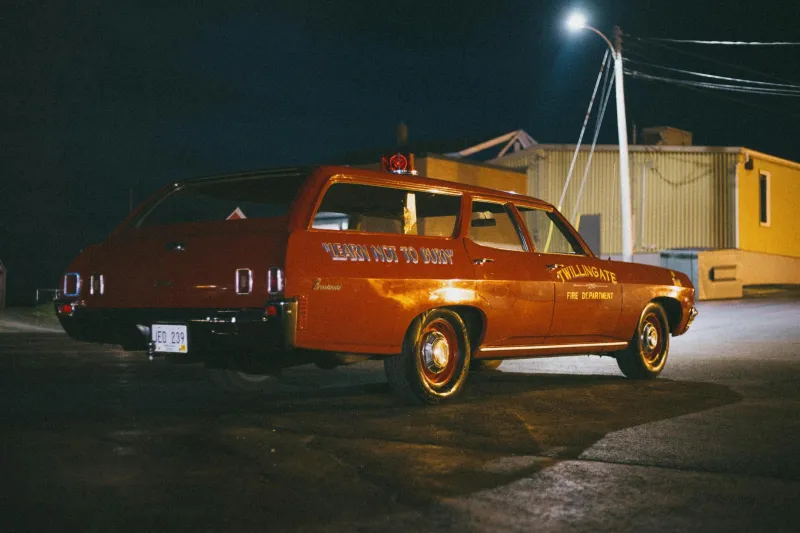
The Station Wagon Summer That Built America's Soul
Picture this: It's July 1978. Your dad loads the wood-paneled station wagon with suitcases, a cooler full of sandwiches, and a road atlas with actual paper pages. Your mom tucks a paperback novel into her purse — the only entertainment she'll need for the next two weeks. No one checks email because email doesn't exist. No one livestreams the Grand Canyon because the concept is pure science fiction.
For two weeks, your family simply vanishes from the world.
This wasn't just a vacation. It was a complete mental reset that modern Americans have forgotten how to take.
When Disconnection Was the Whole Point
The American family vacation of the 1960s through 1980s operated on a principle that sounds almost radical today: the goal was to completely disconnect from your regular life. Families would pile into cars and drive to places like Yellowstone, the Great Smoky Mountains, or a modest beach town where the biggest decision was whether to get ice cream before or after dinner.
These weren't Instagram-worthy adventures. They were gloriously mundane. Dad would fish while reading a paperback thriller. Mom would actually finish crossword puzzles without interruption. Kids would spend entire afternoons skipping stones or building sandcastles without anyone documenting it for posterity.
The vacation rental was a simple motel room or a cabin with knotty pine walls and mismatched furniture. There was no WiFi to troubleshoot, no work calls to field, no social media to update. The most sophisticated technology was usually a black-and-white TV that got three channels if the weather was good.
The Economics of Actually Getting Away
Here's what might shock you most: these genuine escapes were accessible to middle-class families. In 1975, the average American family could afford a two-week vacation on a single income. A week at a decent motel near a national park cost about what a family spent on groceries in a month.
Today, that same week would cost more than most families' monthly rent. The median family vacation now runs close to $5,000 — and that's for a trip where you're still expected to check Slack notifications and respond to "urgent" emails.
But the real cost isn't financial. It's psychological.
The Always-On Vacation Trap
Modern American vacations operate under a completely different set of rules. Even when we physically leave our location, we never truly leave our lives. The smartphone ensures we're perpetually tethered to work, social obligations, and the constant pressure to document every moment.
Consider the modern family at the beach. Dad's on a conference call from the balcony. Mom's managing the family calendar via text while trying to relax by the pool. The kids are more focused on getting the perfect selfie than actually experiencing the sunset.
We've turned vacations into a performance. Every meal gets photographed. Every vista requires the perfect shot. Every moment must be optimized, shared, and validated by others. The idea of simply sitting quietly and watching waves crash — without documenting it — feels almost wasteful.
The Paradox of Infinite Options
Today's travelers have access to destinations our grandparents could never have imagined. We can book flights to Bangkok as easily as our parents booked a cabin in the Catskills. Travel apps promise to optimize every detail of our journey.
Yet Americans are taking fewer vacation days than ever before. When we do travel, we return home reporting higher stress levels than when we left. We've gained the entire world as a potential destination but lost the ability to mentally arrive anywhere.
The 1970s family driving to a lake in Michigan achieved something we struggle to replicate despite our vastly superior resources: they actually escaped.
What We Lost in the Translation
The old-school American vacation wasn't just about the destination. It was about the journey toward becoming temporarily unreachable. Families would tell neighbors they'd be "gone for two weeks" without leaving detailed itineraries or emergency contact protocols.
This created a unique psychological space. Problems at home would have to wait. Work crises would need to resolve themselves. The family existed in a bubble where the biggest concern was whether to stop at that roadside attraction shaped like a giant peach.
Modern vacations, by contrast, are often more exhausting than staying home. We pack our schedules with must-see attractions, must-try restaurants, and must-capture moments. We return needing a vacation from our vacation.
The New Definition of Getting Away
Perhaps most telling is how we now describe successful vacations. Instead of talking about feeling rested or reconnected with family, we measure success by experiences accumulated and content created. We judge trips by how many likes our photos received rather than how recharged we feel.
The station wagon vacation of 1978 might seem impossibly simple by today's standards. No GPS, no restaurant reviews, no ability to share experiences in real-time. But that simplicity created something we've lost: the space for minds to truly wander and families to exist without external validation.
The American vacation didn't just change — it fundamentally transformed from an escape into another form of performance. And somewhere in that transformation, we lost one of the most reliable ways our culture had developed for pressing the reset button on our lives.