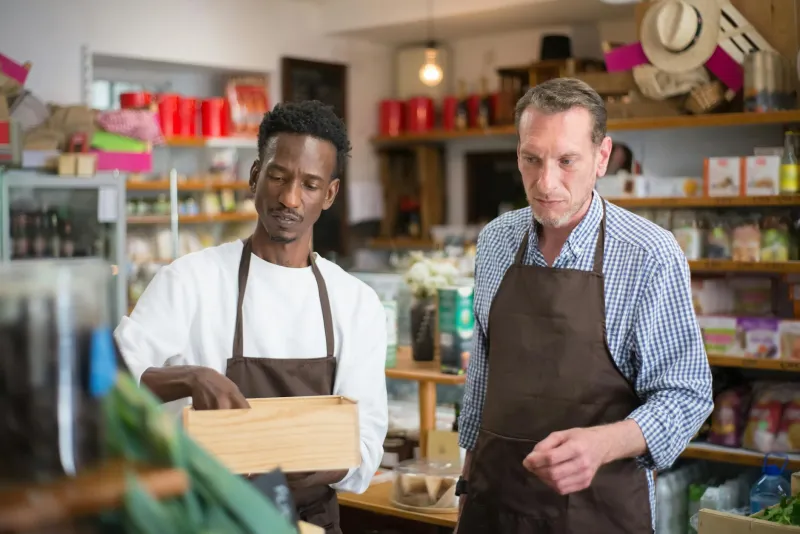
Walk into Miller's Hardware on Main Street in 1975, and you'd encounter something that seems almost mythical today: a store owner who could solve your problem before you finished describing it. Old Joe Miller had been running that shop for thirty years, and in that time, he'd accumulated an encyclopedia's worth of practical knowledge that no computer database could match. Describe a mysterious rattling in your washing machine, and Joe would walk you to aisle three, hand you a fifty-cent part, and explain exactly how to install it. No appointment necessary, no service call required—just expertise freely shared.
That level of personalized knowledge was the norm, not the exception, in small-town America.
The Neighborhood Professor of Practical Things
The traditional hardware store owner occupied a unique position in American communities: part retailer, part consultant, part educator. These weren't just shopkeepers—they were repositories of accumulated wisdom about how things worked, why they broke, and how to fix them properly. Joe Miller could look at a bent screw you brought in and tell you not just what size replacement you needed, but why it bent in the first place and how to prevent it from happening again.
This expertise developed over decades of hands-on experience. Hardware store owners didn't just sell products—they used them, repaired them, and heard detailed reports about their performance from every customer who returned. When Mrs. Patterson came in complaining that her faucet dripped, Joe didn't just sell her a washer. He knew that particular model always developed problems with the seat after about eight years, so he'd include the reseating tool and walk her through the complete repair.
The inventory reflected this deep knowledge. Small-town hardware stores stocked an astonishing variety of specialized parts, often for appliances and fixtures that hadn't been manufactured in years. Joe kept drawer after drawer of obscure bolts, gaskets, and components because he knew that somewhere in town, someone would eventually need exactly that part. The store served as an unofficial museum of American manufacturing, maintaining parts availability long after companies moved on to newer models.
The Art of Diagnostic Conversation
What made these interactions magical was the diagnostic process itself. Customers rarely arrived knowing exactly what they needed. Instead, they came with problems: "My toilet keeps running," "There's a grinding noise in my garbage disposal," "My screen door won't close properly." The hardware store owner became a detective, asking the right questions to identify the real issue.
This conversational troubleshooting required remarkable skill. Without seeing the actual problem, experienced store owners could diagnose issues based purely on customer descriptions, their knowledge of local housing stock, and their understanding of how different systems typically failed. They knew that houses built in the 1950s on Elm Street all had the same type of plumbing, so certain problems would require specific solutions.
The advice extended far beyond parts selection. Hardware store owners taught customers how to use tools properly, explained why certain repairs required professional help, and often talked people out of unnecessary purchases. If a simple adjustment could solve your problem, Joe would explain how to do it rather than sell you a replacement part. This wasn't just good customer service—it was community stewardship.
The Rise of the Warehouse Model
The transformation began in the 1980s with the emergence of home improvement superstores like Home Depot and Lowe's. These warehouse-style retailers offered something small hardware stores couldn't match: enormous selection and competitive prices. Instead of three types of screws, they stocked thirty. Instead of one brand of paint, they offered dozens.
The appeal was undeniable. DIY homeowners could find everything they needed in one location, often at prices significantly lower than small stores could offer. The big boxes achieved these advantages through scale—buying power that allowed them to negotiate better wholesale prices and inventory systems that could efficiently manage thousands of products.
But the warehouse model fundamentally altered the shopping experience. Instead of consulting with an expert, customers navigated vast aisles of products, often without clear guidance about which items best suited their needs. The stores hired employees, but these workers typically possessed general retail skills rather than deep technical knowledge about the products they sold.
What We Gained in Selection
The big box revolution brought substantial benefits that shouldn't be minimized. Modern home improvement stores offer product variety that small-town hardware stores could never match. Homeowners can choose from dozens of faucet styles, compare multiple brands of power tools, and access specialty items that would have required special ordering in the past.
The expanded hours and consistent inventory proved valuable for busy families. Instead of planning trips around the hardware store's limited schedule, customers could shop evenings and weekends. The standardization meant you could find the same products and prices whether you shopped in Ohio or Oregon.
Price competition benefited consumers significantly. Items that cost premium prices at small stores became affordable commodities at big boxes. This democratization of home improvement supplies enabled more Americans to tackle their own repairs and renovations.
The Knowledge Gap Nobody Saw Coming
But something crucial was lost in the transition—something that took years to fully appreciate. The big box stores excelled at selling products but struggled to replicate the diagnostic expertise that made small hardware stores so valuable. Customers gained access to more products but lost access to the knowledge needed to choose the right ones.
Today's home improvement shoppers often spend more time researching purchases online than their grandparents spent in total conversation with knowledgeable store owners. YouTube tutorials attempt to replace the personalized guidance that hardware store owners once provided, but video instruction can't respond to specific questions or adapt to unique circumstances.
The loss became particularly apparent during complex projects. While Joe Miller could guide customers through multi-step repairs, suggesting the right sequence of parts and anticipating potential complications, modern customers often discover problems only after starting projects with incomplete information or inappropriate materials.
The Community Connection
Perhaps most significantly, small hardware stores served as informal community centers where neighbors shared practical knowledge. Customers waiting for help would discuss their projects with other customers, creating spontaneous problem-solving sessions. The store owner often knew which neighbors had relevant skills and would make introductions that led to mutual assistance.
This social function disappeared with the big box model. The warehouse environment discouraged lingering and conversation. Customers focused on efficient shopping rather than community interaction. The collective wisdom that once circulated through small hardware stores had no equivalent gathering place.
What Expertise Really Costs
The death of the neighborhood hardware expert represents a broader shift in how Americans access knowledge. Previous generations developed relationships with local experts—the hardware store owner, the mechanic, the pharmacist—who provided personalized guidance based on deep experience. Today's consumers rely increasingly on impersonal sources: online reviews, instructional videos, and customer service representatives who may be thousands of miles away.
We gained efficiency and selection but lost something harder to quantify: the accumulated wisdom of people who had dedicated their careers to understanding how things work and why they fail. Joe Miller's knowledge died with him, irreplaceable despite all our digital tools and vast product catalogs.
The modern home improvement experience offers everything except what small-town hardware stores provided best: someone who cared enough to make sure you went home with exactly what you needed to solve your problem correctly the first time.