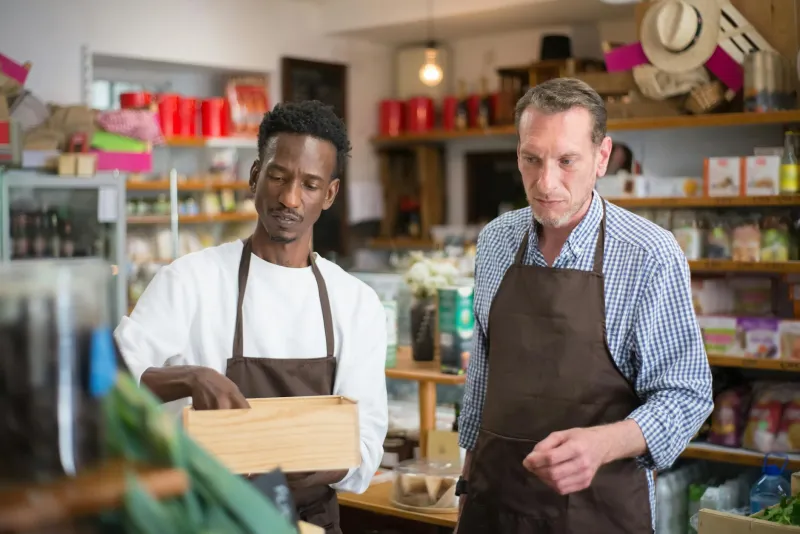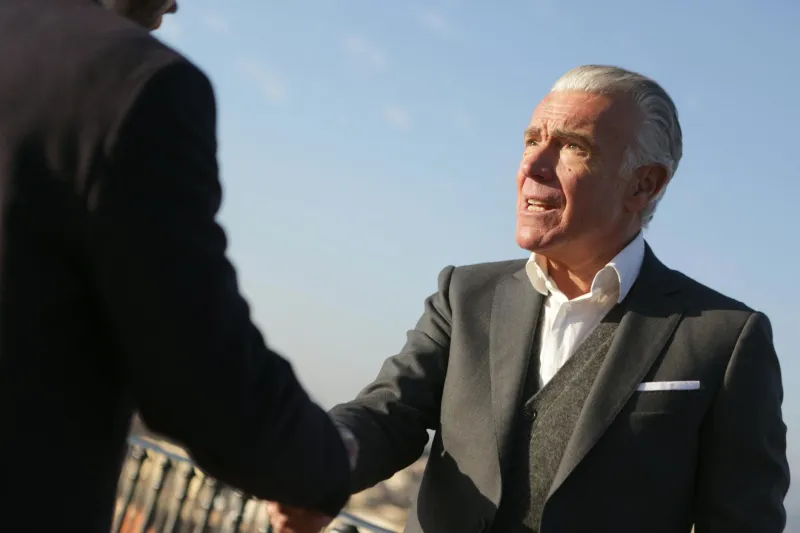
Walk through any American suburb in 1965, and you'd witness something that seems almost mythical today: neighbors conducting serious business with nothing more than eye contact and a firm handshake. The plumber who fixed your kitchen sink was hired after a five-minute conversation over the back fence. The teenager who mowed your lawn all summer was "contracted" with a nod and an agreement to pay him every Friday. Your mechanic ordered parts for your Buick based on your description of a funny noise, trusting you'd cover the cost when you picked up the car.
This wasn't naive optimism—it was how America functioned.
When Your Reputation Was Your Business License
In the post-war decades, most American communities operated on what sociologists call "embedded trust." The plumber fixing your pipes lived three streets over. His kids went to school with your kids. His wife bought groceries from the same store as your wife. If he did shoddy work or overcharged you, the entire neighborhood would know by Sunday morning.
This social architecture made formal contracts almost redundant for everyday transactions. Why would you need a written agreement with someone whose reputation was their most valuable asset? The mechanic who cheated customers wouldn't just lose business—he'd lose his place in the community entirely.
Consider how people bought used cars in 1970. Families often purchased vehicles from neighbors, coworkers, or friends of friends. The "negotiation" happened in someone's driveway, involved a test drive around the block, and concluded with cash changing hands and keys being passed over. No CarFax reports, no extended warranties, no financing paperwork. The seller's word about the car's condition carried weight because their credibility was on the line every time they waved hello from their front yard.
The Paperwork Revolution
Somewhere between the 1970s and today, America transformed into a nation where every interaction requires documentation. That same used car transaction now involves title transfers, emissions certifications, liability disclosures, and often financing agreements longer than most college term papers. Hiring a contractor means navigating insurance certificates, licensing verification, detailed estimates, and contracts that anticipate every possible dispute.
The shift accelerated dramatically with the rise of consumer protection laws and litigation culture. What started as reasonable safeguards against genuine fraud evolved into a system where trust became legally inadvisable. Today's contractors carry liability insurance not because they're less skilled than their 1960s counterparts, but because a single accident could bankrupt them without proper coverage.
Digital technology amplified this transformation exponentially. Every app download, every online purchase, every software update now requires accepting terms of service that would have filled entire filing cabinets in the analog era. We've become a society that legally agrees to thousands of conditions we never read, creating the illusion of informed consent while actually eliminating meaningful choice.
What We Gained and What We Lost
The legalization of everyday life brought undeniable benefits. Consumers gained protection against genuinely predatory businesses. Minority communities, often excluded from the "good old boy" trust networks, found formal systems that offered more equitable treatment. Written contracts provided clarity that prevented many disputes before they started.
But the costs were substantial and largely invisible. The time Americans now spend reading, signing, and filing paperwork for routine transactions represents millions of hours that previous generations spent on more productive activities. More significantly, the assumption that everyone needs legal protection from everyone else fundamentally altered how Americans relate to each other.
The Death of Neighborhood Networks
Perhaps most importantly, the handshake economy required dense social networks that modern Americans have largely abandoned. When your plumber was your neighbor's brother-in-law, you had built-in quality control and dispute resolution. When contractors competed primarily on reputation rather than price, they had incentives to maintain long-term relationships rather than maximize short-term profits.
Today's gig economy and online marketplaces attempt to recreate trust through star ratings and user reviews, but these digital substitutes lack the social weight of genuine community accountability. A contractor with poor Yelp reviews can simply change business names or move to a different platform. A neighbor with a bad reputation had nowhere to hide.
The New Rules of American Trust
Modern Americans haven't become more dishonest than previous generations—we've simply created systems that assume dishonesty as the default. Every transaction begins with the premise that the other party might cheat, lie, or disappear, so we layer on protections that previous generations would have found insulting.
This shift reflects broader changes in American life: increased mobility that weakened neighborhood ties, economic consolidation that replaced local businesses with national chains, and cultural individualism that prioritized personal protection over community cooperation.
The handshake deal wasn't perfect—it often excluded outsiders and could perpetuate local inequalities. But its death marked the end of an America where social trust was the foundation of economic life, replaced by a system where legal protection became more valuable than personal reputation.
In losing the handshake deal, America gained consumer protection and legal clarity. But we lost something harder to quantify: the assumption that our neighbors were fundamentally trustworthy, and the social bonds that made that assumption mostly true.