Before the Internet, Your Mailbox Was Your Digital Dashboard
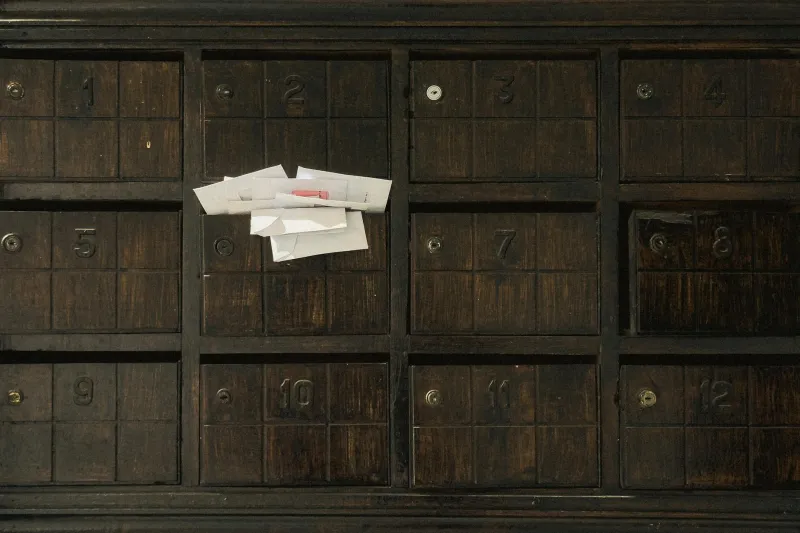
When Your Mailbox Was Mission Control
In 1985, managing your entire adult life required exactly two things: a pen and a roll of stamps. Need to contest a parking ticket? Write a letter. Want to change your address with the IRS? Fill out a form and mail it. Disputing a charge on your Sears card? A handwritten note would do the trick.
This wasn't some quaint throwback to simpler times — it was how America actually functioned. Every government agency, utility company, and financial institution operated through a unified system that everyone understood: the United States Postal Service.
 Photo: United States Postal Service, via cdn.inspireuplift.com
The Beautiful Logic of Paper
The paper trail wasn't just functional; it was foolproof. When you mailed your tax return, you had a receipt. When you sent a dispute letter to your credit card company, you kept a copy. Everything had a timestamp, everything left evidence, and everything moved at a pace that gave both sides time to think.
Consider what you could accomplish with a single trip to the post office in 1980: pay your electric bill, send your voter registration, mail your prescription refill request to the pharmacy, and dispute an insurance claim. Four envelopes, four stamps, and you'd handled what now requires navigating four different websites, three mobile apps, and at least two customer service phone trees.
The system worked because it was standardized. Whether you were dealing with the DMV or Citibank, the process was identical: write clearly, include relevant account numbers, sign your name, and wait for a response that would arrive in your mailbox within two weeks.
When Speed Wasn't the Point
That two-week turnaround wasn't a bug — it was a feature. The postal system built in time for reflection, for double-checking, for human review. When someone at the phone company received your handwritten complaint about an overcharge, they could see your actual signature, read your tone, and respond personally.
Compare that to today's customer service experience. You submit a form through a website that may or may not work, receive an automated confirmation email that tells you nothing, and then wait for a response that's either completely unhelpful or asks you to call a number that routes you through 15 minutes of menu options.
The old system was slower, but it was also more reliable. When you mailed a check to pay your mortgage, you knew exactly when it would arrive, exactly who would process it, and exactly how long you'd wait for confirmation. Today's electronic payments are faster, but they're also more mysterious. Money disappears from your account instantly but sometimes takes days to appear on the other end, with no clear explanation of where it went or why.
The Death of the Paper Trail
By the late 1990s, companies started pushing customers toward phone and online systems, promising convenience and speed. What they delivered instead was fragmentation. Your health insurance company wants you to use their app, but their pharmacy benefit manager has a different portal. Your bank offers online bill pay, but your local utility company still requires you to log into their separate system.
The result is a digital landscape where managing your affairs requires remembering dozens of usernames, passwords, and security questions. Where a simple address change might require updating information across 20 different platforms. Where getting help means navigating automated systems designed more to deflect calls than to solve problems.
What We Lost in Translation
The postal system created accountability in ways we didn't fully appreciate until it was gone. When someone at the electric company received your handwritten letter, they knew a real person had taken the time to sit down, think through the problem, and craft a response. That carried weight.
Today's digital systems, for all their efficiency, often feel like shouting into the void. You submit a form, get a ticket number, and hope for the best. There's no guarantee a human will ever read your message, much less respond thoughtfully to it.
The old paper system also created a shared rhythm. Bills arrived on predictable schedules, responses came within known timeframes, and everyone operated within the same basic expectations. Now every company operates on its own timeline, with its own communication preferences, creating a fragmented experience that leaves customers constantly adapting to new systems.
The Simplicity We Abandoned
Perhaps most importantly, the postal system was universal. Rich or poor, tech-savvy or not, everyone could navigate it with equal ease. You didn't need to own a computer, maintain internet service, or learn new software. A pen, paper, and stamp were all the technology you needed to be a fully participating citizen.
Today's digital-first world has created new barriers. Those without reliable internet access, smartphone skills, or the patience to navigate constantly changing interfaces find themselves increasingly locked out of basic services. The speed and convenience we gained came at the cost of accessibility and simplicity.
The next time you spend 20 minutes trying to submit a simple request through a company's website, remember when the same task required nothing more than a clearly written letter and a 20-cent stamp. Progress isn't always about doing things faster — sometimes it's about doing them better.