The Toy Store Owner Who Remembered Every Kid on the Block — And Why That Magic Is Gone Forever
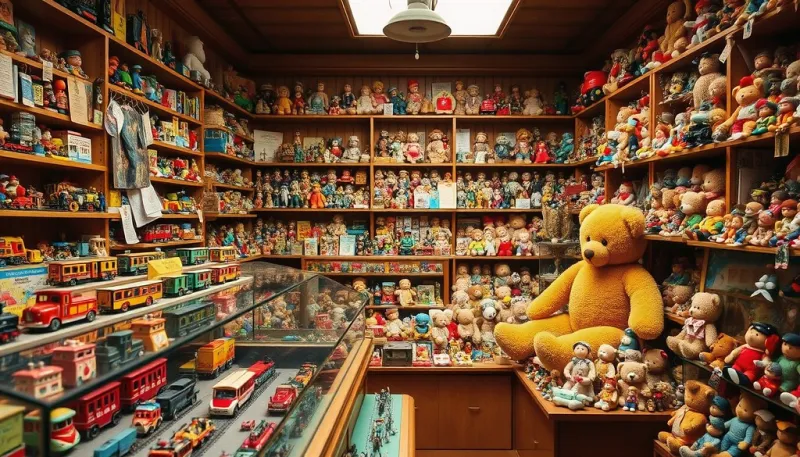
Photo: vintage neighborhood toy store interior children browsing 1970s, via live.staticflickr.com
There was a man named Mr. Hartnett — or someone very much like him — in almost every American town through the 1960s, 70s, and into the 80s. He ran a toy store, usually a narrow, slightly cluttered shop wedged between a hardware store and a diner. He knew your kid's name. He knew your kid collected Matchbox cars and had been eyeing the new Evel Knievel stunt set for three months. When your birthday was two weeks away, he'd quietly set it aside under the counter without being asked.
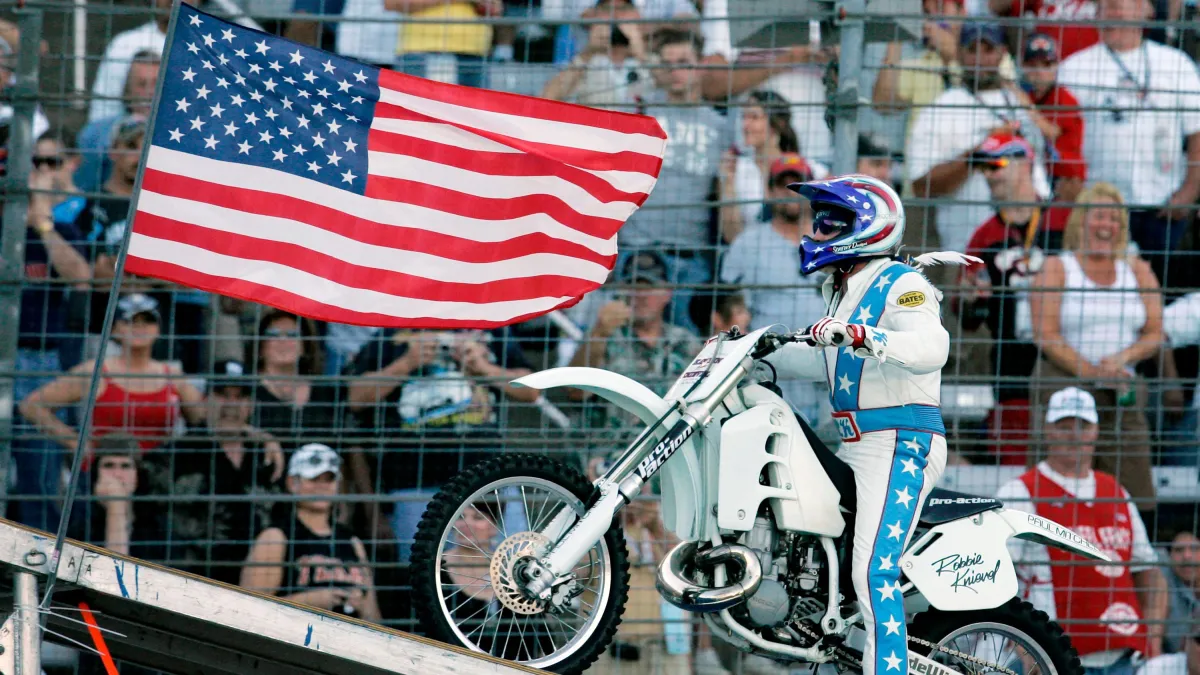 Photo: Evel Knievel, via www.nbc15.com
That wasn't extraordinary customer service. That was just how it worked.
Today, the algorithm knows your kid's browsing history. It's not quite the same thing.
What Shopping for Toys Actually Looked Like
For most of the 20th century, buying a toy was a genuine event. Small independent toy shops operated in neighborhoods across the country, and they had a character that's almost impossible to replicate at scale. The inventory was curated — not by a data team in Seattle, but by a single human being who had watched generations of local kids grow up and knew instinctively what would land.
Glass display cases held the good stuff: model train sets, cap guns with real metal weight, delicate porcelain dolls that required a special kind of asking-nicely before you were allowed to touch them. The store smelled like cardboard and possibility. Browsing wasn't a transaction — it was an experience you'd describe to your friends afterward.
Layaway was a standard part of the ritual. A parent could put a deposit on a coveted item in October, make small payments through November, and pick it up the week before Christmas. The toy store owner wasn't just a merchant. He was a co-conspirator in the project of making the holidays feel magical.
The Expertise Nobody Replaced
Here's what gets overlooked in every conversation about the death of small retail: those store owners were genuinely knowledgeable in a way that mattered. They understood developmental stages, knew which toys were built to last and which ones would fall apart by New Year's Day, and could talk a grandparent through a purchase with patience and specificity that no product page on Amazon has ever matched.
They also knew your kid. Not as a demographic. As a person. If your daughter had been obsessed with horses for two years, Mr. Hartnett knew she was ready for the next level of the Breyer collection and had already ordered it before you walked through the door. That kind of personalized attention wasn't a premium service you paid extra for. It was the baseline.
When you walked out of that store with a wrapped box, you weren't just carrying a product. You were carrying the confidence that you'd gotten it right.
How the Magic Disappeared
The decline didn't happen overnight, and it didn't happen because consumers stopped caring. It happened in waves.
Toys 'R' Us arrived in the late 1970s and changed the economics of toy retail permanently. A store that could buy in massive volume and sell at lower margins simply couldn't be matched on price by a neighborhood shop. Parents who were watching their budgets — and in the inflation-heavy late 70s and early 80s, most of them were — made the rational choice. The big box won on price. It always does.
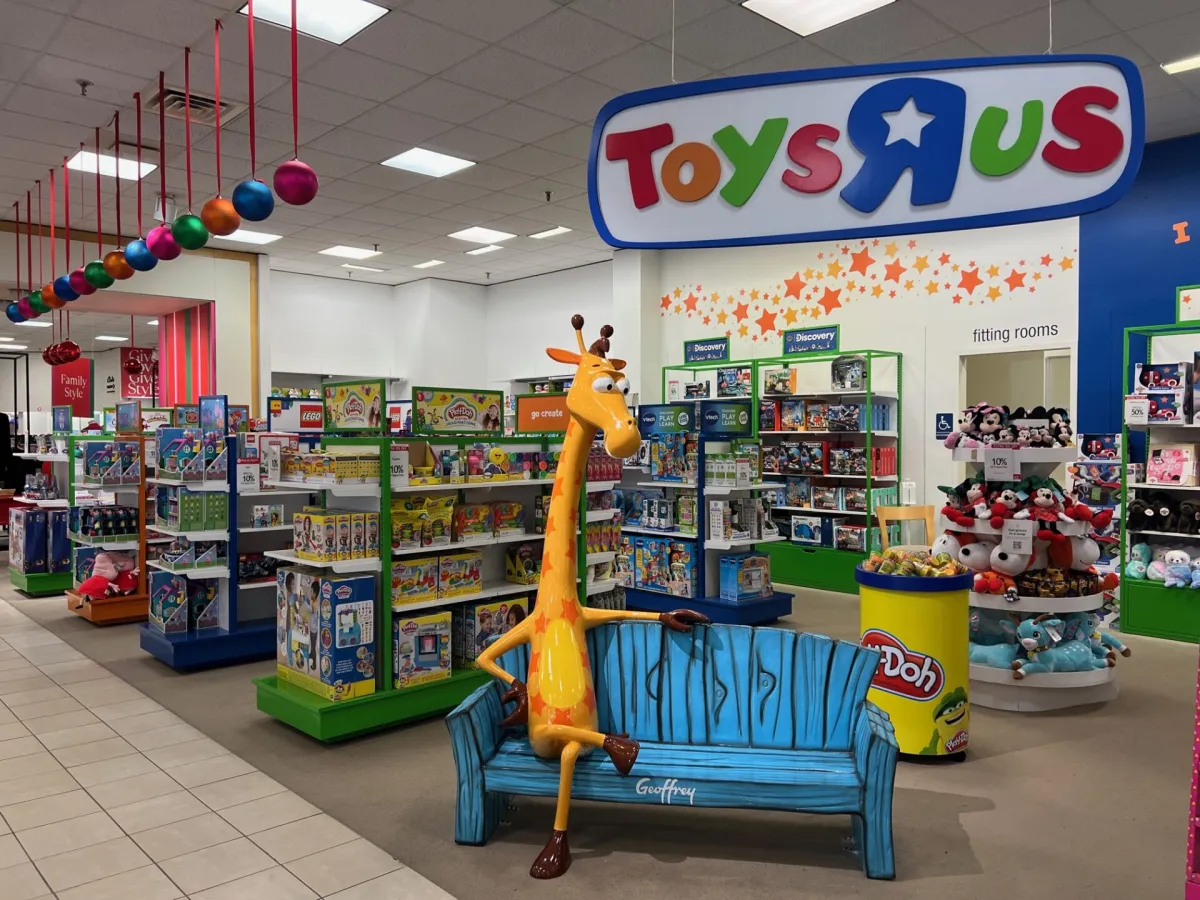 Photo: Toys 'R' Us, via www.siouxfalls.business
By the 1990s, Walmart had entered the toy aisle, and the squeeze intensified. Then came the internet, and with it, the final reckoning. Amazon didn't just offer lower prices — it offered infinite selection, instant availability, and the frictionless convenience of shopping at midnight in your pajamas. Against that combination, sentiment alone couldn't save what remained of independent toy retail.
Even Toys 'R' Us, the giant that had helped kill the neighborhood shops in the first place, couldn't survive the next wave. It filed for bankruptcy in 2017, a victim of the same forces it had once unleashed.
What Kids Lost Without Knowing It
Children today have access to more toys, more variety, and more entertainment options than any generation in history. By almost every measurable standard, the modern toy landscape is more abundant than anything that existed in 1975.
And yet something genuinely got lost.
The ritual of going to the toy store — the anticipation of the trip, the sensory experience of actually handling things before you bought them, the relationship with a person who cared about getting it right — was a small but real part of what made childhood feel distinct and special. It was one of the early experiences where kids learned that the world had experts in it, people who took their interests seriously and treated their enthusiasms with respect.
Today's version of toy shopping is often a parent scrolling a phone while a kid points at a screen. It's efficient. It's convenient. It delivers to your door in two days. But it doesn't feel like anything in particular, and that absence is harder to measure than a price tag.
The Stores That Survived — and What They Prove
A small number of independent toy stores still exist across the country, and the ones that have survived are thriving in ways that are genuinely instructive. Shops like Kazoo Toys in Denver, Learning Express locations across the midwest, and dozens of one-of-a-kind local shops have found that the hunger for exactly what Mr. Hartnett used to offer never actually went away.
Customers drive further, pay more, and come back regularly — because the experience of being known, being guided, and being genuinely helped is worth something that a Prime membership can't replicate.
The neighborhood toy store didn't disappear because people stopped wanting it. It disappeared because the economics of modern retail made it nearly impossible to sustain. That's a distinction worth sitting with the next time you add something to your cart without thinking twice.