When Mom Made the Cake From Scratch and Nobody Photographed It
The Kitchen Table Birthday
In 1982, planning a child's birthday party required exactly three decisions: chocolate or vanilla cake, which neighbors to invite, and whether to play musical chairs or pin the tail on the donkey. The whole affair could be organized in a single phone call and executed with whatever was already in your kitchen cabinets.
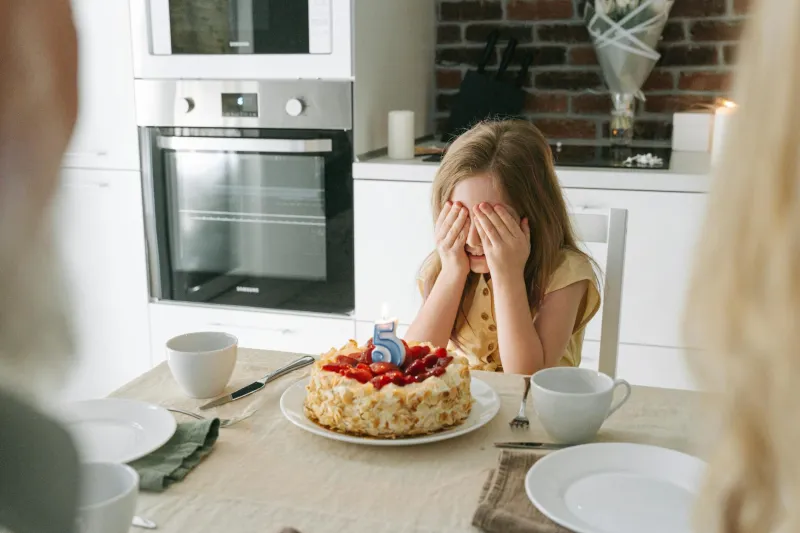
Mom would spend Saturday morning mixing batter from scratch, letting you lick the bowl if you promised not to tell anyone about the raw eggs. The cake came out slightly lopsided, decorated with drugstore frosting and candles that had been saved from last year's celebration. Nobody thought to photograph the process — it was just another weekend morning, just another homemade cake.
That simplicity feels almost impossible to imagine today, when children's birthday parties have become elaborate productions that require weeks of planning, professional coordination, and budgets that rival small weddings.
When Birthdays Were Actually About Birthdays
The traditional American birthday party followed an unwritten script that every parent understood. Kids from the neighborhood would arrive at 2 PM with gifts wrapped in whatever paper was on sale at Woolworth's. The entertainment consisted of whatever games could be played in the backyard: freeze tag, red light green light, or hide and seek.
The cake was the centerpiece, but it was also the endpoint. Everyone gathered around the dining room table, sang "Happy Birthday" slightly off-key, watched the birthday child make a wish and blow out the candles, then ate cake with vanilla ice cream served on paper plates. The whole celebration lasted maybe two hours, and cleanup involved throwing away plates and sweeping up crumbs.
Parents weren't performers in this scenario — they were facilitators. Mom supervised the games, Dad might help with the candles, and both parents made sure nobody got hurt or left out. The focus remained squarely on the birthday child and the simple joy of marking another year of life.
The Rise of Birthday Entertainment
Somewhere in the 1990s, the birthday party began its transformation from celebration to spectacle. Chuck E. Cheese pioneered the idea that birthday parties should be events rather than gatherings, complete with animatronic entertainment, arcade games, and professional party hosts who managed the schedule with military precision.
 Photo: Chuck E. Cheese, via www.chuckecheese.com
The success of commercial party venues created new expectations. If other kids were having parties with organized entertainment, themed decorations, and elaborate activities, how could your home-based celebration compete? Parents began to feel pressure to "level up" their party game, transforming what had been casual neighborhood gatherings into carefully orchestrated events.
The rise of Pinterest in the 2010s accelerated this trend exponentially. Suddenly, every parent had access to thousands of party ideas that looked like they'd been designed by professional event planners. DIY projects that promised to make your party "Pinterest-perfect" required hours of preparation, specialized supplies, and skills that many parents didn't possess.
When Documentation Became the Point
Perhaps the most dramatic shift has been the role of photography in modern birthday celebrations. The old-fashioned birthday party might generate a single snapshot — the moment when candles were blown out — captured on whatever camera happened to be handy.
Today's birthday parties are documented like state visits. Parents hire professional photographers to capture "candid" moments that are carefully staged. Every detail is photographed: the elaborate decorations, the themed food displays, the coordinated outfits, the children's reactions to each planned activity.
Social media has turned birthday parties into public performances. Parents feel pressure to create events that will look impressive in Instagram posts and Facebook albums. The party isn't just for the birthday child anymore — it's for the audience of friends, family, and acquaintances who will judge the family's creativity, resources, and parenting skills based on how the celebration photographs.
The Economics of Celebration
This transformation has dramatically changed what it costs to celebrate a child's birthday. A 1980s party might cost $20 for cake ingredients, ice cream, and party favors. Today's "typical" children's birthday party averages over $400, according to party planning industry surveys.
The expense isn't just financial — it's temporal and emotional. Modern birthday parties require weeks of planning, shopping for specialized decorations, coordinating with vendors, and managing complex logistics. What was once a spontaneous celebration has become a project that rivals organizing a business conference.
This escalation has created new forms of social pressure and inequality. Families who can't afford elaborate celebrations may feel inadequate, while children begin to expect increasingly expensive forms of entertainment. The simple joy of marking another year of life gets lost in the competition to create the most memorable experience.
The Professionalization of Childhood Joy
The modern birthday party industry includes specialized vendors for every conceivable element: balloon artists, face painters, party planners, themed entertainers, custom cake decorators, and photography services. What parents once provided themselves — entertainment, food, decoration — is now outsourced to professionals.
This professionalization promises to reduce stress for parents while creating more magical experiences for children. But it also removes the personal touch that made old-fashioned parties special. When Mom spent Saturday morning baking your cake, you knew it was made specifically for you, with love and attention that no professional baker could replicate.
Children today may have more elaborate parties, but they're often passive recipients of experiences created by adults rather than active participants in celebrations. The backyard games that required imagination and cooperation have been replaced by structured activities managed by hired entertainers.
What We Lost in the Translation
The shift from simple to spectacular birthday celebrations reflects broader changes in American parenting culture. We've become more anxious about providing our children with perfect experiences, more competitive about demonstrating our parental dedication, and more focused on creating memories that look impressive to outsiders.
But memories aren't made by professional photographers or themed decorations — they're made by genuine moments of joy, connection, and celebration. The children who remember their childhood birthdays most fondly often recall simple details: the taste of mom's homemade frosting, the excitement of blowing out candles, the feeling of being surrounded by friends who came just to celebrate them.
The Sweetness of Simplicity
There's something to be said for the birthday party that nobody photographed, the cake that came out slightly crooked, the games that kids invented on the spot because they got bored with the planned activities. These imperfect celebrations taught children that love doesn't require professional coordination, that joy doesn't need to be documented to be real, and that the best parties are often the ones where everyone forgets to worry about how things look.
The next time you're planning a child's birthday party, consider the radical simplicity of the 1980s approach: invite some friends, make a cake, sing the song, and focus on the birthday child rather than the Instagram feed. The memories created might not be Pinterest-perfect, but they'll be perfectly real — and that's worth celebrating.