The $200 Suit That Lasted a Lifetime: When Americans Dressed With Purpose
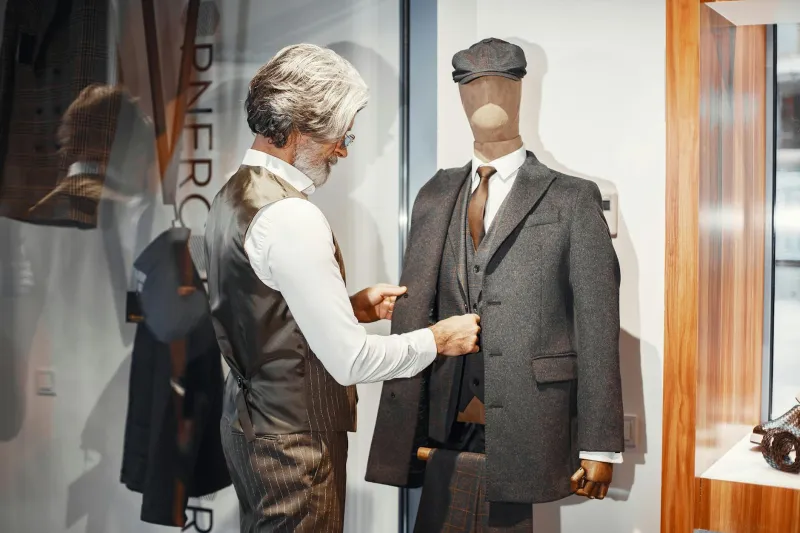
In 1965, Harold Zimmerman saved for eight months to buy his first real suit. He was 23, newly married, and working as a bank teller in Cleveland. The charcoal gray wool suit from Higbee's department store cost $89—nearly a week's salary—but it came with a promise: proper care and occasional alterations would keep it looking sharp for decades.
 Photo: Harold Zimmerman, via www.southafricaspecialist.co.uk
Harold wore that suit to job interviews, church services, his children's graduations, and finally his retirement party 40 years later. When he passed away in 2018, his son found it hanging in the closet, still perfectly pressed, still beautifully tailored, still ready for its next important occasion.
Today, you can buy five "suits" at Target for what Harold paid for one, and throw them all away before the season changes.
When Clothing Was an Investment
For most of the 20th century, Americans approached clothing the way they approached buying a car or a house: as a serious financial decision that required research, saving, and long-term thinking. A quality suit or dress represented weeks or months of careful budgeting, making each purchase a significant life event.
Men would typically own two or three suits total—one for work, one for church and special occasions, and maybe one for everyday wear if they were lucky. Women might have a handful of dresses that they'd coordinate with different accessories to create variety. The idea of having a closet full of clothes you barely wore was as foreign as having three cars in the driveway.
Clothing stores operated more like furniture showrooms than today's retail warehouses. Salespeople were knowledgeable professionals who could assess fabric quality, explain construction techniques, and recommend pieces that would complement what you already owned. They understood that they were selling something you'd live with for years, not something you'd discard next month.
The Craft Behind the Clothes
Quality clothing required skilled craftsmanship that justified its price. Suits were constructed with hand-sewn buttonholes, genuine horn buttons, and canvas interfacing that would hold its shape for decades. Women's dresses featured French seams, quality zippers, and fabrics that could withstand countless washings without fading or shrinking.
Local tailors and seamstresses were common fixtures in American neighborhoods, providing alterations, repairs, and custom work that extended the life of every garment. A good tailor could let out a waistband, adjust sleeve length, or completely restyle a dress to follow changing fashions while preserving the quality of the original construction.
This ecosystem of skilled craftspeople meant that clothing was designed to be maintained, not replaced. Buttons could be re-sewn, hems could be adjusted, and small tears could be invisibly mended. The relationship between Americans and their clothes was collaborative—you invested in quality pieces and then worked to preserve that investment over time.
The Social Weight of Appearance
Clothing carried serious social and professional weight in ways that seem almost quaint today. Your appearance communicated your respect for others, your understanding of appropriate behavior, and your place in the community. This wasn't superficial vanity—it was social literacy.
Men wore suits to work, to church, to travel, and to any social gathering that mattered. Women coordinated their outfits carefully, understanding that their appearance reflected not just personal taste but family status and social awareness. Children were taught to dress appropriately for different occasions, learning that clothing was a form of communication.
This emphasis on appropriate dress created a shared visual language that helped people navigate social situations. You could tell at a glance who was prepared for the occasion and who understood the social context. Clothing was armor, uniform, and identity marker all rolled into one carefully chosen outfit.
The Birth of Disposable Fashion
The transformation began in the 1980s and accelerated through the 1990s and 2000s. Global manufacturing made it possible to produce clothing at costs that previous generations couldn't have imagined. A dress that once required a month's saving could suddenly be purchased with pocket change.
Fast fashion retailers like H&M, Zara, and Forever 21 introduced the concept of constantly changing inventory, with new styles arriving weekly instead of seasonally. The message was clear: fashion was no longer about investing in timeless pieces, but about staying current with rapidly changing trends.
This shift coincided with increasingly casual workplace dress codes, the rise of athleisure wear, and a cultural move away from formal social occasions. Americans began to see clothing as entertainment rather than investment, leading to overstuffed closets full of items worn only once or twice.
What We Lost in the Bargain
The democratization of fashion brought obvious benefits—more choices, lower costs, and freedom from rigid dress codes that could be exclusionary and expensive. But it also eliminated the careful consideration that once went into building a wardrobe.
Modern Americans often own more clothing than their grandparents could have imagined, yet frequently complain about having "nothing to wear." The abundance of cheap options has paradoxically made getting dressed more complicated, not easier. Without the constraints of cost and durability, many people struggle to develop a coherent personal style.
The environmental cost has been staggering. The fashion industry now produces over 100 billion garments annually, most of which will be discarded within a year. The average American throws away 81 pounds of clothing annually, creating textile waste that fills landfills and pollutes waterways worldwide.
The Lost Art of Wardrobe Building
Perhaps most significantly, we've lost the skill of building a cohesive wardrobe over time. Previous generations understood how to select pieces that would work together, how to care for quality fabrics, and how to adapt their clothing to different occasions through thoughtful accessories and styling.
The idea of "investment dressing"—buying fewer, better pieces that would serve multiple functions over many years—has been replaced by impulse buying and trend chasing. Many young Americans have never experienced the satisfaction of wearing a beloved garment for years, watching it develop character and personal history.
Dressing With Intention in a Disposable World
The pendulum may be starting to swing back. Growing awareness of fast fashion's environmental impact has sparked interest in sustainable fashion, vintage clothing, and quality over quantity approaches to dressing. Some Americans are rediscovering the pleasure of owning fewer, better things.
But returning to a more intentional relationship with clothing requires relearning skills that were once common knowledge: how to assess fabric quality, how to care for different materials, and how to build a wardrobe that reflects personal values rather than fleeting trends.
The $200 suit that lasted a lifetime wasn't just about clothing—it was about understanding the difference between cost and value, between fashion and style, between having things and choosing things with purpose. In our current era of infinite options and instant gratification, that might be a lesson worth tailoring to fit modern life.