The Town That Marched Together: America's Vanishing Parade Culture
Photo: Mack Sennett Comedies / Associated First National, Public domain, via Wikimedia Commons
The Town That Marched Together: America's Vanishing Parade Culture
There's a photograph that exists in some version in almost every American family's archive from the mid-twentieth century: a crowd lining a main street, flags out, kids on shoulders, a marching band frozen mid-step. The expressions are unremarkable — nobody's performing joy for a camera. They're just there, together, watching something move through the center of their shared world.
That photograph captures something that has become genuinely rare. The American town parade — once as reliable as the seasons — is quietly disappearing, and most people haven't fully noticed.
When Parades Were Just What You Did
For the first two-thirds of the twentieth century, public parades were a foundational feature of American civic life. The Fourth of July parade was the obvious anchor, but the calendar was far fuller than that. Memorial Day processions. Homecoming parades for the local high school team. Welcome-home marches for veterans returning from overseas. Harvest festivals. Town centennials. Christmas parades. Parades for visiting dignitaries, for newly elected officials, for championship teams that might never make national news but were everything to the people who watched them play.
Small towns might hold four or five parades a year without considering themselves particularly parade-happy. The logistics were handled largely by civic organizations — the American Legion, the Elks, the Kiwanis, the local volunteer fire department — groups that had the organizational muscle and community standing to pull off a procession without much bureaucratic scaffolding.
The format was genuinely democratic. A parade required almost nothing beyond a street, a date, and people willing to march or watch. Local businesses built floats from flatbed trailers and crepe paper. School bands that had been practicing for weeks finally had an audience. Veterans who spent most of the year as ordinary neighbors walked in uniform and were seen differently for an afternoon.
The Shared Street as Civic Technology
What the parade actually accomplished — beneath the bunting and the baton twirlers — was something that urban planners and community psychologists now spend considerable energy trying to recreate artificially: it turned public space into shared experience.
When a parade moved through town, it temporarily reclaimed the street from its utilitarian function and gave it back to the community as spectacle and gathering place. People who might never have reason to stand next to each other stood next to each other. The lawyer and the mechanic watched the same float from the same curb. Kids from different parts of town chased the same candy thrown from the same fire truck.
This kind of involuntary proximity — being placed alongside your neighbors without having chosen them — is increasingly rare in American life. We've become extraordinarily good at curating our social environments, filtering our feeds, and spending time only with people who share our preferences and worldview. The parade didn't allow for that. It was communal and indiscriminate, and that was precisely its value.
How the Bureaucracy Ate the Parade
The decline didn't happen because Americans stopped wanting to celebrate. It happened because the infrastructure required to hold a parade became progressively more demanding, expensive, and discouraging.
Permit requirements, which barely existed for most of the twentieth century, have expanded dramatically in most American municipalities. A parade permit today might require applications filed weeks or months in advance, traffic management plans, coordination with multiple city departments, and fees that can run into the thousands of dollars for a mid-sized event.
Insurance requirements have been equally transformative. Parade organizers are now typically required to carry substantial liability coverage — policies that community organizations and volunteer groups can rarely afford without significant fundraising or corporate sponsorship. The moment a parade requires a corporate sponsor to cover its insurance, it has changed in character in ways that are hard to articulate but easy to feel.
The civic organizations that once served as the organizational backbone of community parades have also contracted sharply. Membership in groups like the American Legion, the Elks, and the Kiwanis has declined steeply since the 1970s. The volunteer infrastructure that made a parade a manageable community project has thinned out, leaving the work to a smaller group of people carrying a heavier load.
Screens Filled the Silence
Into the space left by declining parades, the screen arrived — and it offered something that looked, at first glance, like a reasonable substitute. The Macy's Thanksgiving Day Parade is watched by tens of millions of Americans, but almost exclusively on television. The Rose Parade draws a national audience to a spectacle that most viewers experience as broadcast content rather than lived presence.
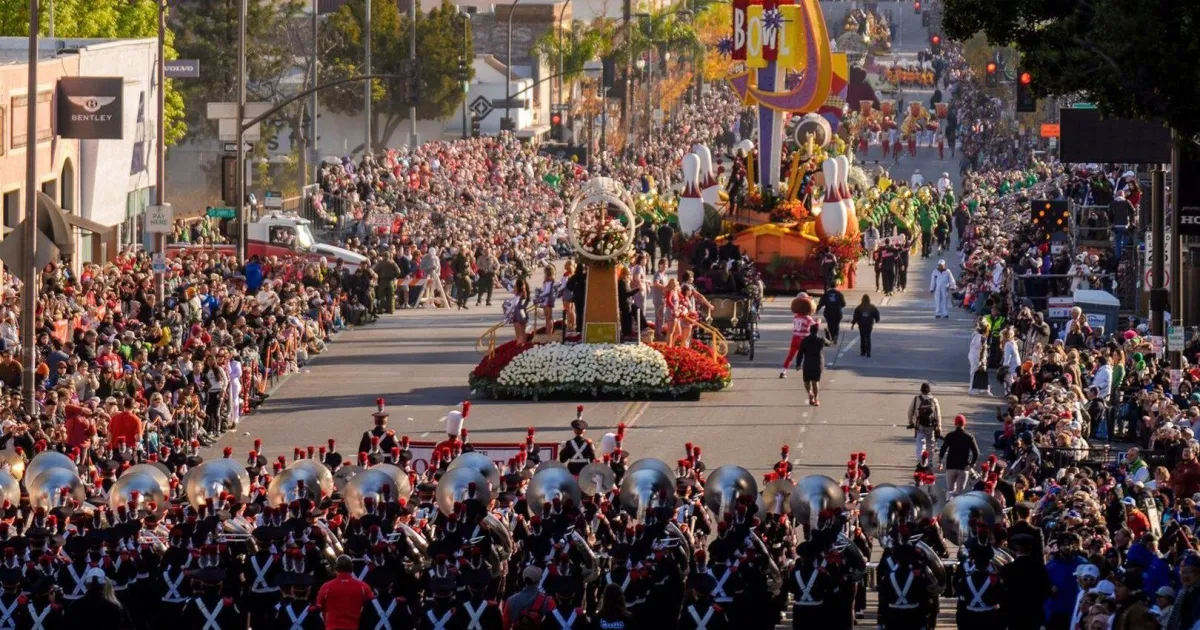 Photo: Rose Parade, via bloximages.chicago2.vip.townnews.com
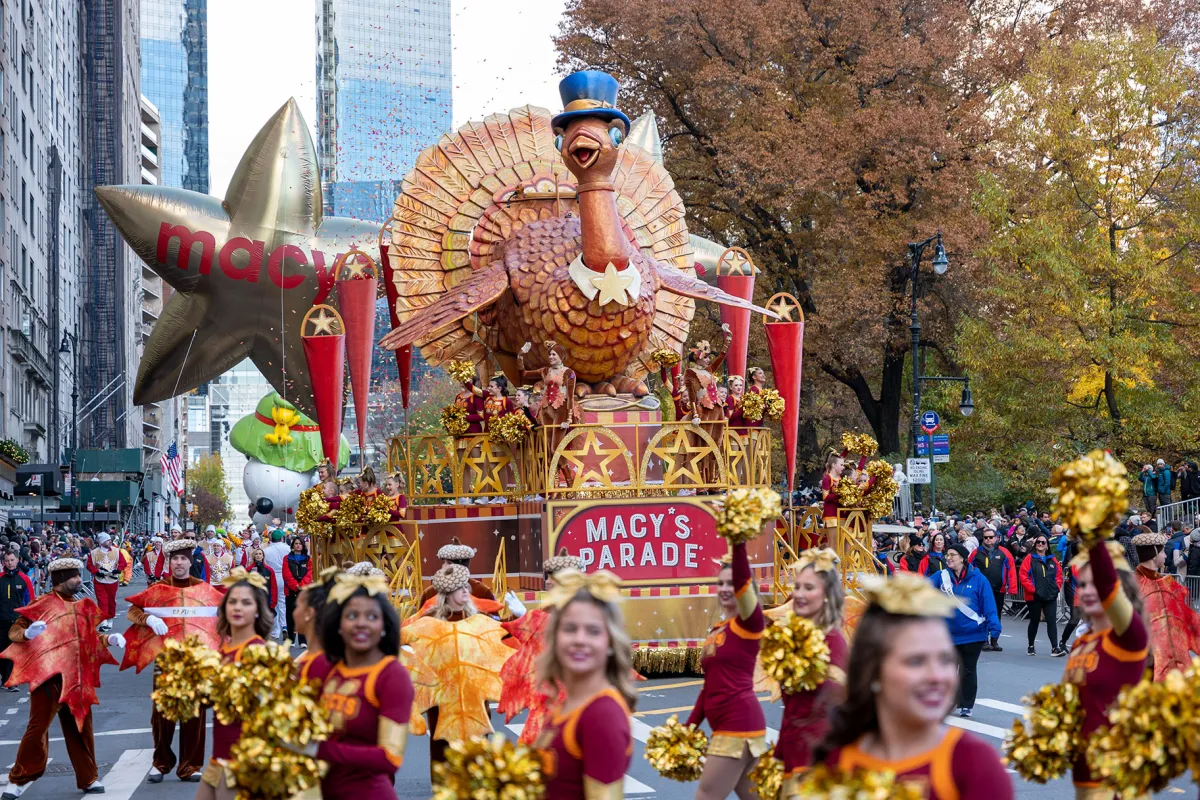 Photo: Macy's Thanksgiving Day Parade, via www.nbc.com
This is the modern bargain: we've traded participation for spectatorship, physical presence for high-definition proximity. The parade on television is objectively more spectacular than anything a small town could produce. The floats are bigger, the celebrities are real, the production values are extraordinary. And yet something fundamental has been lost in the translation from street to screen.
A parade you watch on television happens to you. A parade you stand in the cold for, that your kid marches in, that your neighbor built a float for — that parade happens with you. The distinction matters more than it might seem.
What the Empty Street Reveals
The towns that have lost their parades haven't just lost an entertainment option. They've lost a mechanism for reminding themselves that they exist as a collective — that the people sharing their zip code are not just strangers who happen to live nearby, but participants in something shared.
This matters in an era when community cohesion is under serious pressure from political polarization, social media fragmentation, and the general retreat into private life. Researchers who study social capital — the networks of trust and reciprocity that make communities function — consistently find that shared public rituals are among the most powerful generators of that capital. The parade, in all its modest, crepe-paper glory, was doing real work.
A few communities have pushed back deliberately. Some small towns have stripped their parade processes down to the essentials, cutting through permit complexity with streamlined local ordinances. Others have found creative ways to fund insurance through community fundraising. These efforts tend to be met with genuine enthusiasm — turnout for revived local parades often surprises the organizers who expected indifference.
The appetite for standing on a curb and watching your neighbors march by hasn't disappeared. We've just made it harder to feed.